

Choosing the right professional for a Section 1031 exchange is a critical financial decision. A specialized 1031 exchange agent focuses exclusively on tax-deferred transactions, offering deep expertise in IRS timelines and replacement property criteria. A general realtor provides broad market access but may lack the specific procedural rigor required for complex exchanges. For investors in the Alabama Gulf Coast, the choice depends on your portfolio complexity and risk tolerance. This guide compares both options to help you select the right partner for your next move.
Understanding the 1031 Exchange Process
A 1031 exchange is a tax-deferred transaction that allows investors to swap like-kind properties without recognizing capital gains immediately. The process is governed by strict Internal Revenue Service (IRS) rules, including a 45-day identification period and a 180-day closing deadline. Missing these deadlines can result in the disqualification of the exchange and immediate tax liability. While the concept is straightforward, the execution requires precise coordination between the seller, buyer, and a qualified intermediary. Understanding these mechanics is the first step in choosing the right representation.
Option 1: The Specialized 1031 Exchange Agent
A specialized 1031 exchange agent is a real estate professional who focuses primarily or exclusively on facilitating tax-deferred exchanges. These agents often possess additional credentials, such as the Certified Commercial Investment Member (CCIM) designation, which demonstrates advanced knowledge in commercial and investment real estate. Their primary value lies in their ability to navigate the specific constraints of the exchange process. They understand how to structure offers that align with the buyer's tax goals and how to manage the tight timelines required by the IRS. For investors in high-value coastal markets, this specialization can mean the difference between a successful deferral and a costly error.
Strengths of Specialized Representation
Specialized agents bring a data-driven approach to property selection. They analyze cap rates, cash flow, and long-term appreciation potential with a focus on the exchange's success. They are experienced in coordinating with qualified intermediaries and ensuring that all documentation meets IRS standards. This level of detail is crucial for complex transactions involving multiple properties or high-value assets. Their focus on the financial health of the replacement property helps protect the investor's long-term portfolio value.
Limits and Considerations
Specialized agents may have a narrower focus on specific property types or markets. They might not offer the same breadth of residential options as a general agent. However, for investors whose primary goal is tax efficiency and portfolio growth, this focus is often a benefit rather than a limitation. The key is to ensure the agent has deep local market knowledge in the specific area where you are acquiring the replacement property.
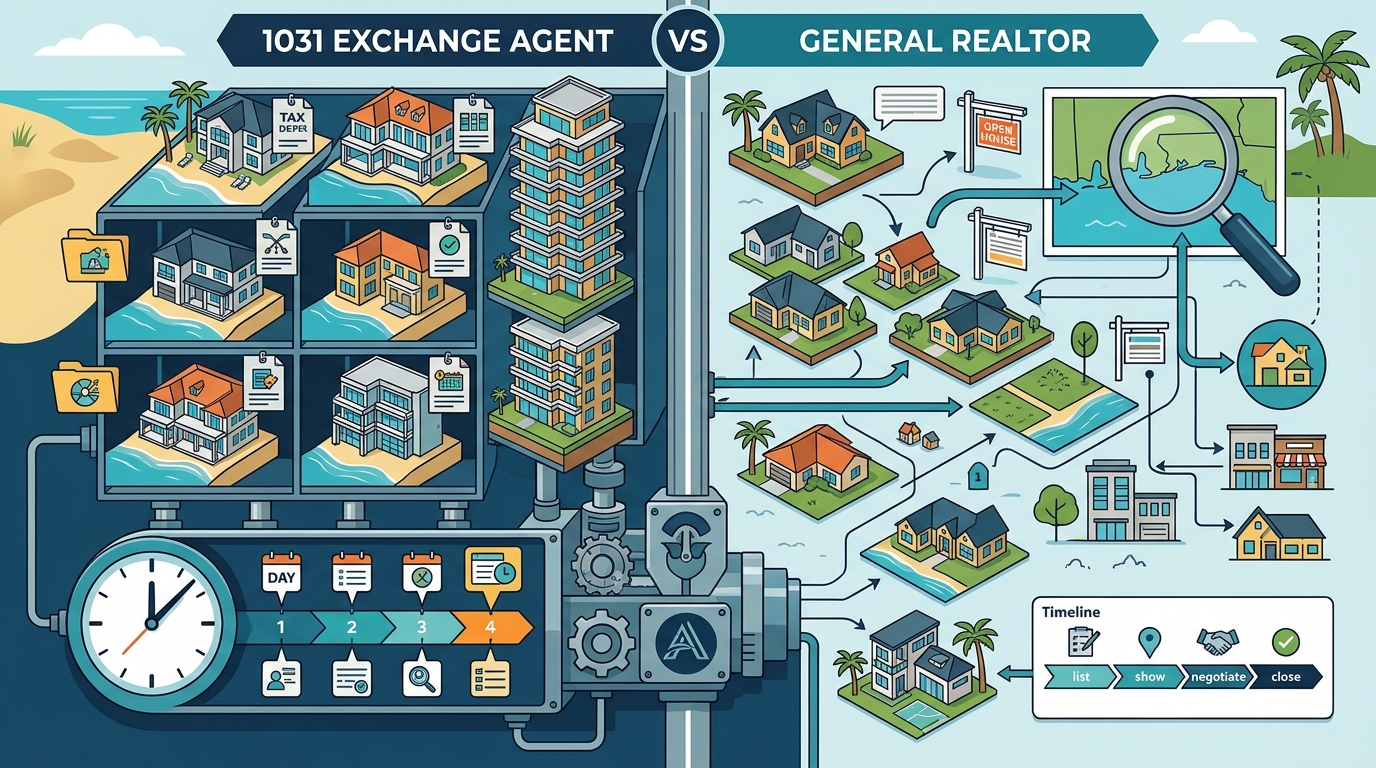
Option 2: The General Realtor
A general realtor is a licensed professional who represents buyers and sellers across a wide range of property types, from residential homes to commercial spaces. They provide broad market access and are well-versed in standard transaction processes. For a simple purchase or sale, a general realtor is often sufficient. However, when it comes to 1031 exchanges, their expertise may vary significantly. Some general realtors have extensive experience with exchanges, while others may have limited exposure to the specific requirements of tax-deferred transactions.
Strengths of General Representation
General realtors offer extensive local knowledge and a wide network of contacts. They can provide valuable insights into neighborhood trends, school districts, and lifestyle amenities. Their broad experience allows them to handle various transaction types, which can be beneficial if your portfolio includes both residential and investment properties. They are often more accessible and may have a larger inventory of available properties to choose from.
Limits and Considerations
The primary limitation of a general realtor in a 1031 exchange is the potential lack of specialized focus. They may not be as familiar with the nuances of IRS regulations or the specific financial modeling required for exchange properties. This can lead to missed opportunities or procedural errors if the agent is not fully engaged in the exchange process. It is essential to verify their specific experience with 1031 exchanges before engaging them for this type of transaction.
Comparison Table: Specialized Agent vs. General Realtor
| Criteria | Specialized 1031 Exchange Agent | General Realtor |
|---|---|---|
| IRS Timeline Management | High expertise in 45/180-day rules | Variable, depends on individual experience |
| Financial Analysis Depth | Focus on cap rates, cash flow, and tax impact | Focus on market value and comparable sales |
| Property Inventory Access | Targeted investment properties | Broad residential and commercial inventory |
| Coordination with Intermediaries | Seamless, routine process | May require additional coordination |
| Local Market Knowledge | Deep focus on specific investment niches | Broad knowledge of general local market |
| Best For | Complex exchanges, high-value assets | Simpler transactions, first-time investors |
Choosing the Right Partner for Your Exchange
Selecting the right professional depends on your specific investment goals and the complexity of your transaction. The following guidance can help you make an informed decision.
Choose a Specialized 1031 Exchange Agent If:
- You are executing a complex exchange involving multiple properties or high-value assets.
- Your primary goal is tax efficiency and long-term portfolio growth.
- You require detailed financial analysis, including cap rates and cash flow projections.
- You are unfamiliar with the 1031 exchange process and need expert guidance.
- You are investing in a specialized market, such as Gulf-front condominiums or luxury beachfront homes.
Choose a General Realtor If:
- You are executing a simple, straightforward exchange with a single replacement property.
- You already have a trusted relationship with a general realtor who has 1031 experience.
- Your primary focus is on lifestyle amenities and local community features.
- You are a first-time investor seeking broad market access and general guidance.
- Your transaction does not involve complex financial structures or high-value assets.
Frequently Asked Questions
Can a general realtor handle a 1031 exchange?
Yes, a general realtor can handle a 1031 exchange, but their success depends on their specific experience with the process. It is crucial to verify their track record with exchanges and their understanding of IRS regulations. If they have limited experience, you may need to work closely with a qualified intermediary to ensure compliance.
What is the cost difference between a specialized agent and a general realtor?
Commission structures are generally similar for both types of agents, typically ranging from 2% to 3% of the sale price. However, specialized agents may charge additional fees for their expertise in financial analysis and exchange coordination. It is important to discuss all fees and services upfront to avoid surprises.
How do I verify an agent's 1031 exchange experience?
Ask for specific examples of past exchanges they have handled, including the complexity of the transactions and the outcomes. You can also check for additional credentials, such as the CCIM designation, which indicates advanced knowledge in investment real estate. Requesting references from past clients who have completed exchanges is also a good practice.
What happens if I miss the 180-day deadline?
If you miss the 180-day deadline to close on the replacement property, the exchange is disqualified, and you will owe capital gains taxes on the sale of the relinquished property. This is why working with an agent who is experienced in managing timelines is critical. They can help you identify and close on suitable properties within the required window.
Can I use a specialized agent for both the sale and the purchase?
Yes, a specialized agent can represent you in both the sale of your relinquished property and the purchase of your replacement property. This dual representation can streamline the process and ensure consistency in your strategy. However, you must still use a qualified intermediary to hold the funds from the sale during the exchange period.
What is the role of a qualified intermediary in a 1031 exchange?
A qualified intermediary is a third-party entity that holds the funds from the sale of your relinquished property and facilitates the purchase of the replacement property. They are required by the IRS to ensure that the exchange is structured correctly. Your real estate agent will coordinate with the qualified intermediary to ensure all documentation and timelines are met.
Conclusion
The choice between a specialized 1031 exchange agent and a general realtor depends on your specific needs and the complexity of your transaction. For investors in the Alabama Gulf Coast, where property values and market dynamics can be nuanced, specialized expertise can provide significant advantages. Gulf Coast Investment Property offers guidance for coastal acquisitions. Whether you are looking for a vacation home or an investment property, the right partner can make a significant difference in your financial outcome. To explore your options, contact our team for a private consultation. Learn more: Contact Gulf Coast Real.