
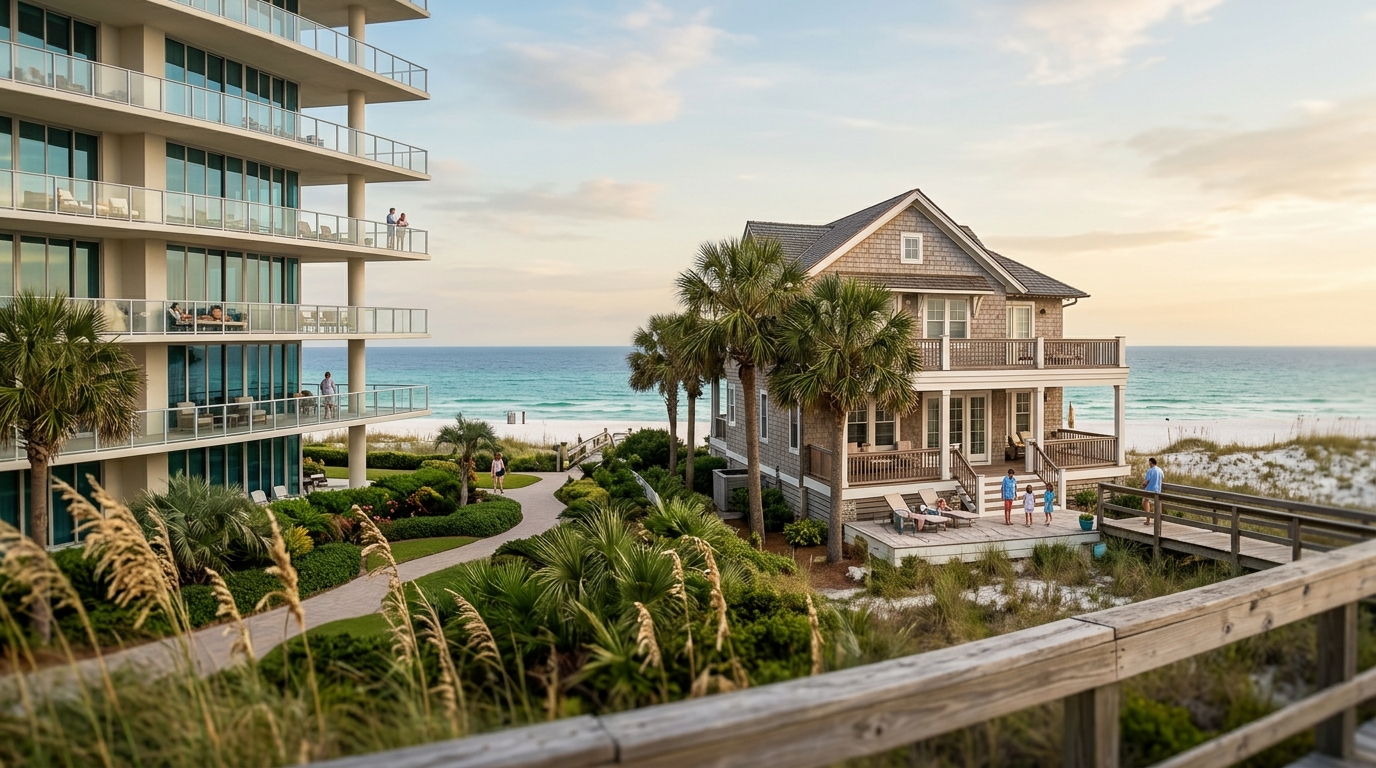
Choosing between a beachfront condominium and a single-family home depends on your risk tolerance, capital availability, and management style. Condos offer lower entry costs and shared maintenance, making them ideal for first-time investors or those seeking passive income. Single-family homes provide greater autonomy, higher appreciation potential, and unrestricted renovation capabilities, suiting long-term wealth builders. Gulf Coast Investment Property helps investors navigate these distinct asset classes with data-driven analysis.
Beachfront Condominiums: Shared Assets and Lower Entry Barriers
A beachfront condominium is a unit within a larger building where the owner holds title to the interior space and shares ownership of common areas like lobbies, pools, and elevators. This structure significantly lowers the barrier to entry compared to standalone homes. Investors benefit from professional management of exterior maintenance, landscaping, and structural repairs, which are covered by monthly HOA fees. However, this convenience comes with a trade-off: you are buying a stake in the building's financial health. The strength of the association's reserves and insurance coverage directly impacts your ownership experience and resale value. If the building faces a major structural issue or underfunded reserves, special assessments can arise, potentially eroding your equity. For investors, the key is auditing the condo association's financials before purchase. You must verify that the HOA has adequate reserves for future repairs and that the insurance policy covers windstorm and flood risks appropriately. This due diligence is critical in coastal markets where weather events can be costly.
Single-Family Homes: Autonomy and Appreciation Potential
A single-family home is a detached residential structure where the owner holds title to both the building and the land it sits on. This full ownership grants investors complete control over renovations, zoning compliance, and rental strategies. Unlike condos, single-family homes are not subject to restrictive HOA rules regarding short-term rentals or exterior modifications, provided local zoning laws are met. This autonomy allows for significant value creation through strategic upgrades. Furthermore, land ownership is a finite resource, particularly in prime coastal areas like Fort Morgan or Orange Beach. As developable beachfront land becomes scarcer, single-family homes often exhibit stronger long-term appreciation trends. However, this autonomy also means you bear the full burden of maintenance. Roof replacements, HVAC systems, and exterior painting are your sole responsibility. These costs can be substantial and must be factored into your cash flow projections. Investors must be prepared for the operational demands of managing a standalone property, from plumbing emergencies to structural inspections.
Comparison: Condos vs. Single-Family Homes
| Criteria | Beachfront Condo | Single-Family Home |
|---|---|---|
| Entry Price | Lower | Higher |
| Maintenance Responsibility | Shared via HOA | Sole Owner |
| Rental Restrictions | Often Restricted | Generally Flexible |
| Appreciation Potential | Moderate | High (Land Value) |
| Management Effort | Low (Passive) | High (Active) |
| Insurance Complexity | HO-6 Policy | Full Dwelling Policy |
Choose a Condo If You Want Passive Income
Choose a condominium if your primary goal is passive income with minimal operational involvement. Condos are well-suited for investors who live out of state and prefer a hands-off approach. The HOA handles exterior maintenance, and professional property managers can oversee guest turnover. This model works best for buyers who prioritize liquidity and lower upfront capital. However, you must accept the constraints of the association. Rental restrictions may limit your ability to operate a short-term rental, and special assessments can impact your cash flow. If you are comfortable with shared governance and lower maintenance burdens, a condo is a strong entry point into the coastal market.
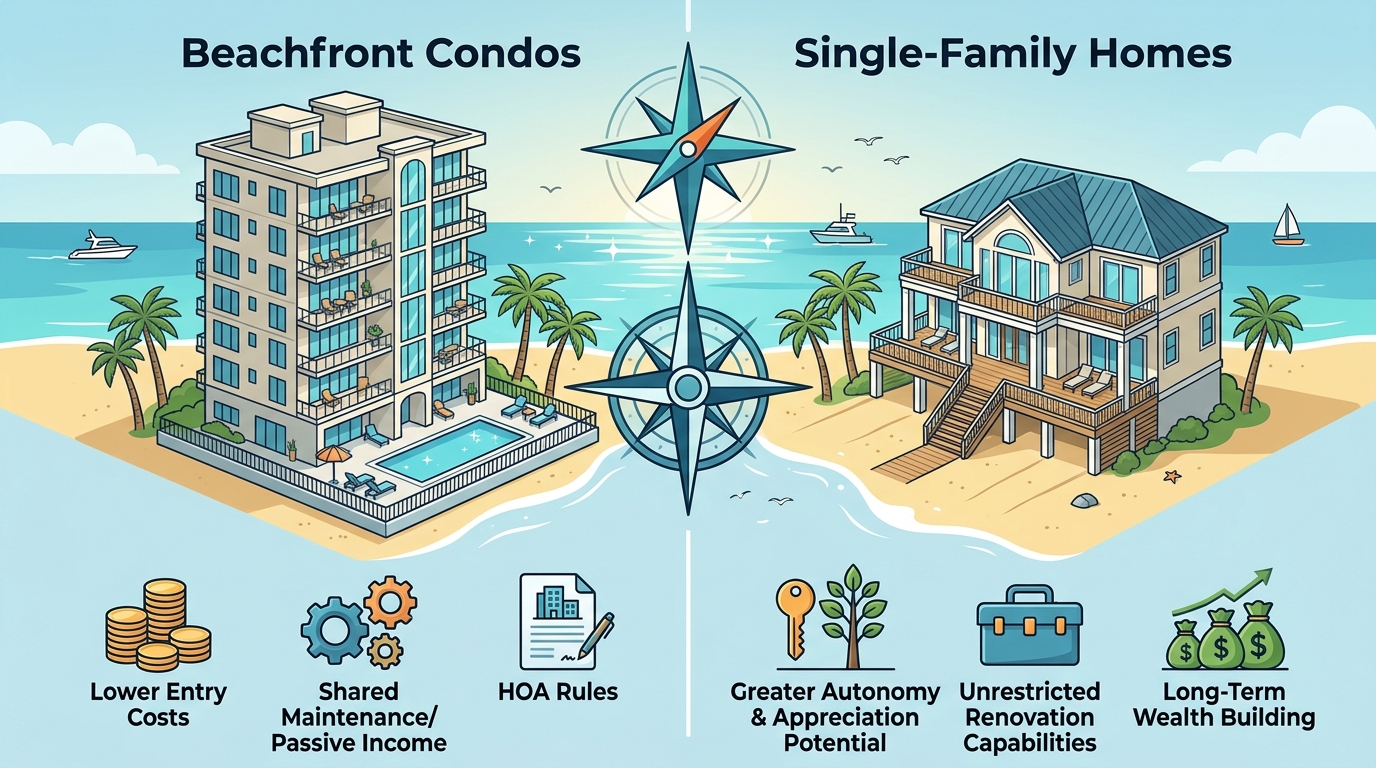
Choose a Single-Family Home If You Seek Control
Choose a single-family home if you value autonomy and long-term land appreciation. This option suits investors who are willing to manage property operations or hire a dedicated management team. You have the freedom to renovate, rezone, and market the property without HOA interference. The land component provides a hedge against inflation and scarcity, particularly in high-demand areas like Gulf Shores. If you are prepared for higher capital outlay and active management, a single-family home offers greater upside potential and strategic flexibility.
Frequently Asked Questions
Are condos easier to sell than single-family homes?
Condos often have higher liquidity due to lower price points and broader buyer pools. However, resale value is heavily influenced by the building's reputation and HOA financials. Single-family homes may take longer to sell but often command higher premiums due to land ownership.
Do HOA fees cover all maintenance costs?
HOA fees typically cover common area maintenance and exterior structural repairs. They do not cover interior unit repairs, personal property, or special assessments for major building projects. Buyers should review the reserve study to understand future funding needs.
Can I rent out a condo as a short-term rental?
It depends on the association's rules. Many Gulf Coast condos have restrictions on short-term rentals, including minimum stay requirements or outright bans. You must verify the specific building's covenants before purchasing for rental income.
Which option has higher insurance costs?
Single-family homes generally have higher insurance premiums because the owner is responsible for the entire structure and land. Condo owners pay for an HO-6 policy, which covers interior contents and improvements, while the master policy covers the building structure.
How do I evaluate a condo association's financial health?
Request the association's budget, reserve study, and meeting minutes. Look for a reserve fund that covers at least 70% of projected major repairs. A healthy reserve fund indicates financial stability and reduces the risk of special assessments.
Conclusion
Both beachfront condos and single-family homes offer viable investment opportunities in the Alabama Gulf Coast. Condos provide accessibility and passive management, while single-family homes offer control and land appreciation. Your choice should align with your financial goals, risk tolerance, and management capacity. Gulf Coast Investment Property provides the local expertise and data-driven analysis you need to make an informed decision. Contact us to discuss your investment strategy and explore available opportunities in Gulf Shores, Orange Beach, and Fort Morgan.